
Release time: 2026-09-26
Laser Fume Extractor Filters: When to Replace and How to Buy
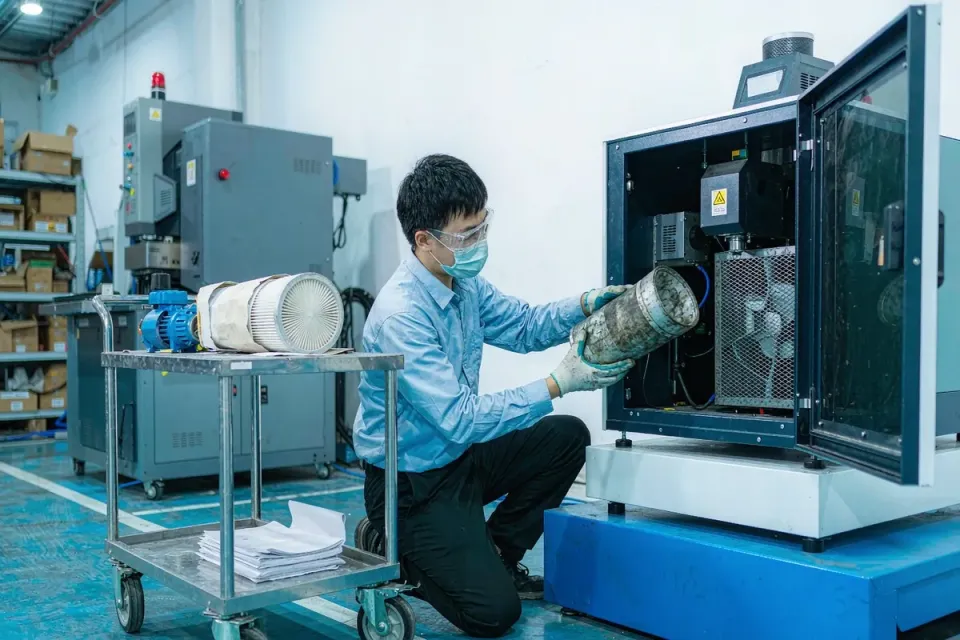
Summary: Laser fume extractor filters should be replaced on pressure drop, not on a calendar: log the clean differential at commissioning, then change when it rises about half again over baseline. Match replacements by rated airflow, filtration class and housing footprint, and keep carbon media sealed until installation.
A fume extractor filter rarely fails loudly. It lets smoke drift across the marking head, the lens fogs a little more each week, and the operator blames the laser. By the time anyone checks, it has been overdue for a month.
Replacing on a calendar is guesswork. Replacing on pressure drop is not.
What Actually Loads a Filter
Two things collect in the same housing. Particulate from marking builds on the pre-filter and clogs it. Volatile organics pass through and load the carbon stage, so the unit moves air while it stops absorbing odour.
That split matters when you buy. A line marking PVC or coated board blinds the pre-filter before the carbon is spent. One marking bare stainless does the opposite, leaving you changing carbon with a clean pre-filter.
Reading Pressure Drop Instead of the Calendar
Fit a differential gauge across the filter bank if the extractor does not already show one. Read it at commissioning while the media is clean, then watch the trend.
With a clean baseline on record, replacement stops being a debate. A rise of about half again over baseline is the usual trigger on single-shift work, and it comes faster in summer when the extractor works harder.
Matching a Replacement to the Machine
Filters are specified by flow rate, filtration class and housing footprint. A filter with the right face dimensions and the wrong media class fits and still underperforms, which is the expensive kind of mistake because nothing looks wrong.
Take three numbers off the nameplate: rated airflow, specified filtration class, and the particle size the process actually generates. Buy against those, not against whatever a listing calls a universal fit.
Why Cheap Media Costs More on a Laser Line
Thin pleat packs hold less dust, so they load faster and need changing twice as often. The unit price looks like half. Over a year it is not, once labour and downtime are counted.
Watch the seal as well. A filter that leaks at the gasket passes smoke through and films the optics, and that film costs more to clean than the filter cost to buy. Keep replacements bagged, since carbon media absorbs whatever is in the air around it. The same shelf discipline applies to chips, ink and make-up solvent for CIJ and TIJ platforms, which TOPMARK keeps for VJ, DM and other brands together.
The Record That Saves the Next Decision
Write the date, the differential at change and the run hours on the housing. Three lines per change. After a year you know your real interval instead of the datasheet figure, and the next order is a phone call rather than a project.
For more on CIJ TIJ consumables and compatible chips, browse our industry insights.
Related products
Insights
- Industrial Coding Equipment Supplier: What B2B Buyers Compare
- Printer’s Chip Supplier: How to Tell a Maker From a Reseller
- Leadtech Ink Chips: A Wholesale Sourcing Guide for B2B Buyers
- Case Coding Supplier in China: What B2B Buyers Should Check Now
- Cartucho CJC: How to Match Ink Cartridges to Coder Chips 2026