
Release time: 2026-09-24
Industrial Ink Marking Systems: What B2B Buyers Actually Compare
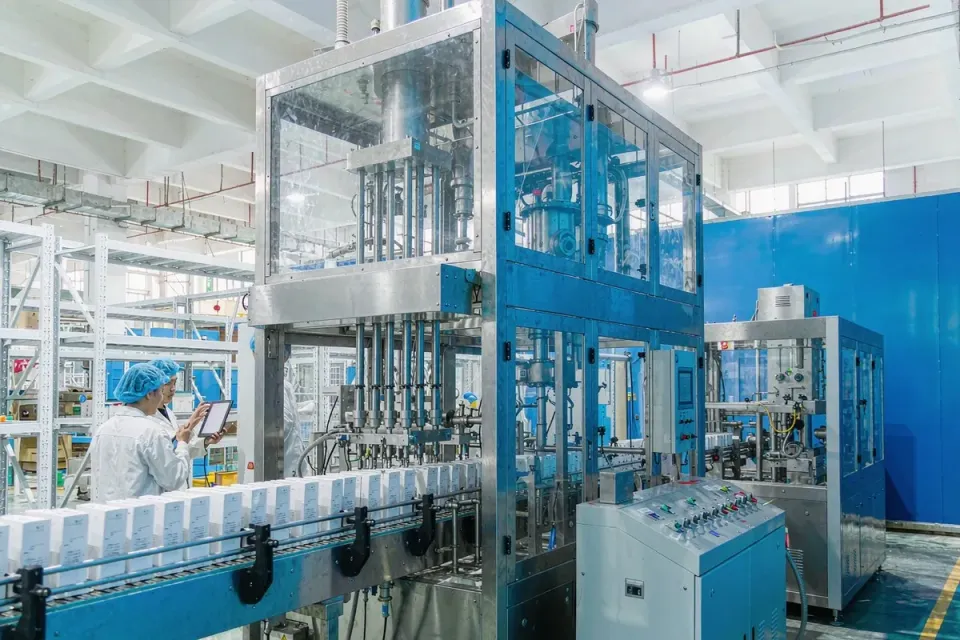
Summary: Marking decisions get argued over the machine, but the cost lives in the system around it: fluids, chips, spare parts and service response. Here is what B2B buyers compare once the coder itself is a given, and the five rows that separate two equal-looking quotes.
Most marking decisions get argued over the machine. The coder is the visible part, and it is also the smallest line in the whole calculation.
An industrial ink marking system is the machine plus everything that keeps it printing: fluids, chips, spare parts, the service arrangement behind it, and how many minutes a stopped line costs you. Buyers who compare only the box end up renegotiating the rest of it in year two.
The Machine Is the Smallest Part of the Decision
List what actually runs every month: ink, make-up solvent, chips, filters, service calls and operator time. On a two-shift line, consumables and service together usually outweigh the coder’s purchase price inside the first two years. That total is the number worth comparing, not the quotation.
Fluids and Chips Decide Your Running Cost
Ask any supplier two questions before the demo. Which fluid families does the system accept, and who supplies the chips once the warranty ends. A system that only runs original cartridges ties your monthly cost to a single price list. A system with a worked-out compatible supply chain gives you a second source, and that second source is what you actually negotiate with.
Service Response Beats Service Promise
Contract wording rarely survives contact with a Friday night stoppage. Ask for the last twelve months of response times in writing, on lines comparable to yours. Then ask what happens on a public holiday. If the answer is a call centre number, the markup you are paying covers branding more than uptime.
What CIJ Commits You To
Continuous inkjet suits porous surfaces, high line speeds and short codes that have to stay legible. It also commits you to solvent handling, ventilation and a maintenance rhythm. If your volumes are low and your codes are simple, a thermal inkjet unit may cost less to run. Buy the system that matches the application rather than the one with the better brochure.
A Comparison Sheet That Survives the Meeting
Put five rows on one page: consumables cost per thousand codes, chip and filter availability, guaranteed response time, spare parts lead time and training included. Fill it from written offers only. Systems that look equal on price separate quickly on that sheet. For brands such as DM, Hitachi or Linx, TOPMARK keeps the chip, filter and fluid side of the list stocked, so the running-cost row is measured rather than guessed.
For more on CIJ TIJ consumables and compatible chips, browse our industry insights.
Related products
Insights
- Industrial Coding Equipment Supplier: What B2B Buyers Compare
- Printer’s Chip Supplier: How to Tell a Maker From a Reseller
- Leadtech Ink Chips: A Wholesale Sourcing Guide for B2B Buyers
- Case Coding Supplier in China: What B2B Buyers Should Check Now
- Cartucho CJC: How to Match Ink Cartridges to Coder Chips 2026